Archivos
-
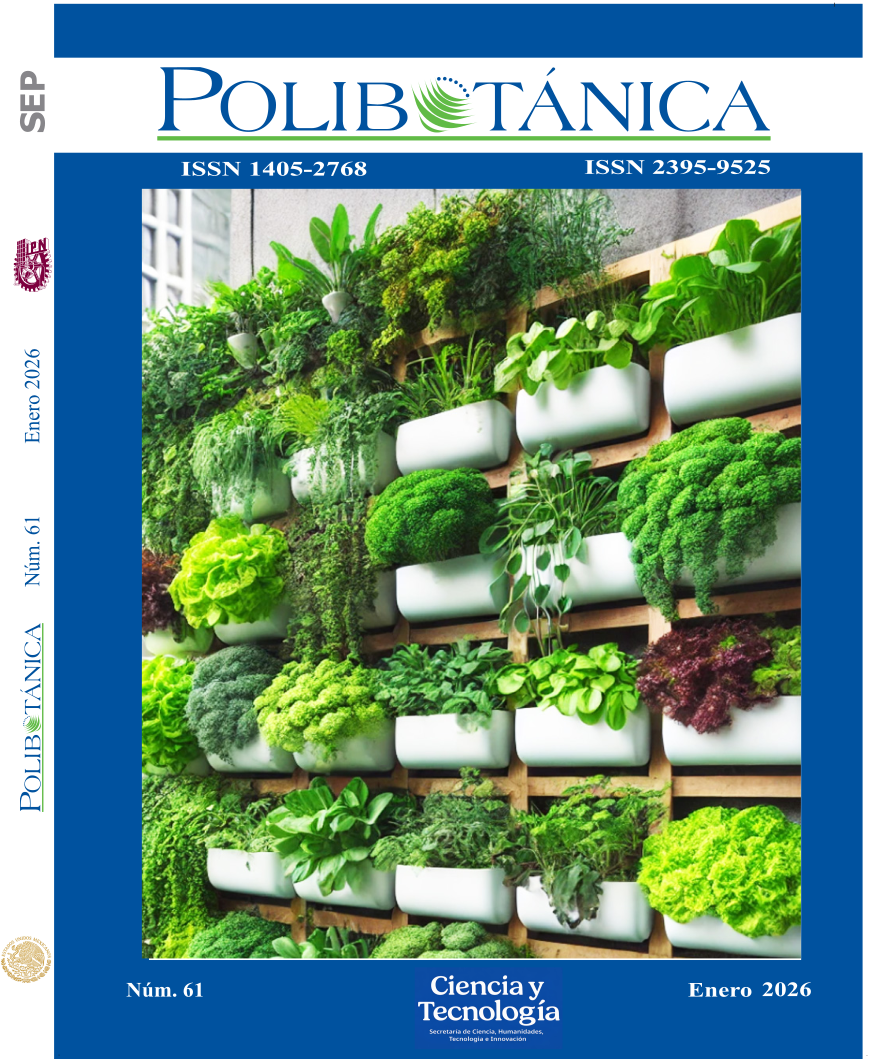
POLIBOTANICA 61
Núm. 61 (31)Sistema de cultivo vertical integrado por módulos contenedores uniformes que albergan diversas especies herbáceas y foliares. La disposición estratificada optimiza el uso del espacio y favorece la eficiencia en la captación de luz, mientras que la heterogeneidad morfológica de las plantas evidencia la plasticidad fenotípica asociada a condiciones de cultivo intensivo en ambientes urbanos. Este sistema representa una forma de infraestructura verde orientada a la producción vegetal sustentable y a la mejora microclimática en entornos metropolitanos.
Por Rafael Fernández Nava
-

POLIBOTANICA 60
Núm. 60 (30)Bursera fagaroides (Kunth) Engl. Burseraceae. “Copal blanco” o “torote”. Árbol o arbusto resinoso de hasta 8 m de altura, con corteza delgada que se desprende en placas papiráceas. Hojas compuestas, imparipinnadas, con 3–9 foliolos de forma elíptica a lanceolada, de 2–6 cm de largo. Inflorescencias axilares o terminales, con pequeñas flores verdosas o amarillentas. Fruto una drupa ovoide que al madurar se abre en dos valvas, exponiendo una semilla parcialmente envuelta por un arilo rojizo. Se distribuye desde el sur de Estados Unidos hasta el centro y sur de México, en zonas de selva baja caducifolia y matorral xerófilo, entre los 500 y 1,800 m s.n.m. Planta rica en resinas aromáticas, tradicionalmente usada para producir copal con fines ceremoniales y medicinales.
Por Rafael Fernández Nava
-

POLIBOTANICA 59
Núm. 59 (30)Las plantas arvenses son aquellas que crecen de manera espontánea en ambientes cultivados, generalmente consideradas como malezas o malas hierbas debido a que compiten con los cultivos por recursos como agua, luz y nutrientes. Aunque suelen tener connotaciones negativas en la agricultura, muchas especies arvenses poseen valores ecológicos, medicinales o alimenticios, y pueden contribuir a la biodiversidad del entorno. Su manejo adecuado es fundamental para equilibrar su impacto en los sistemas agrícolas.
-
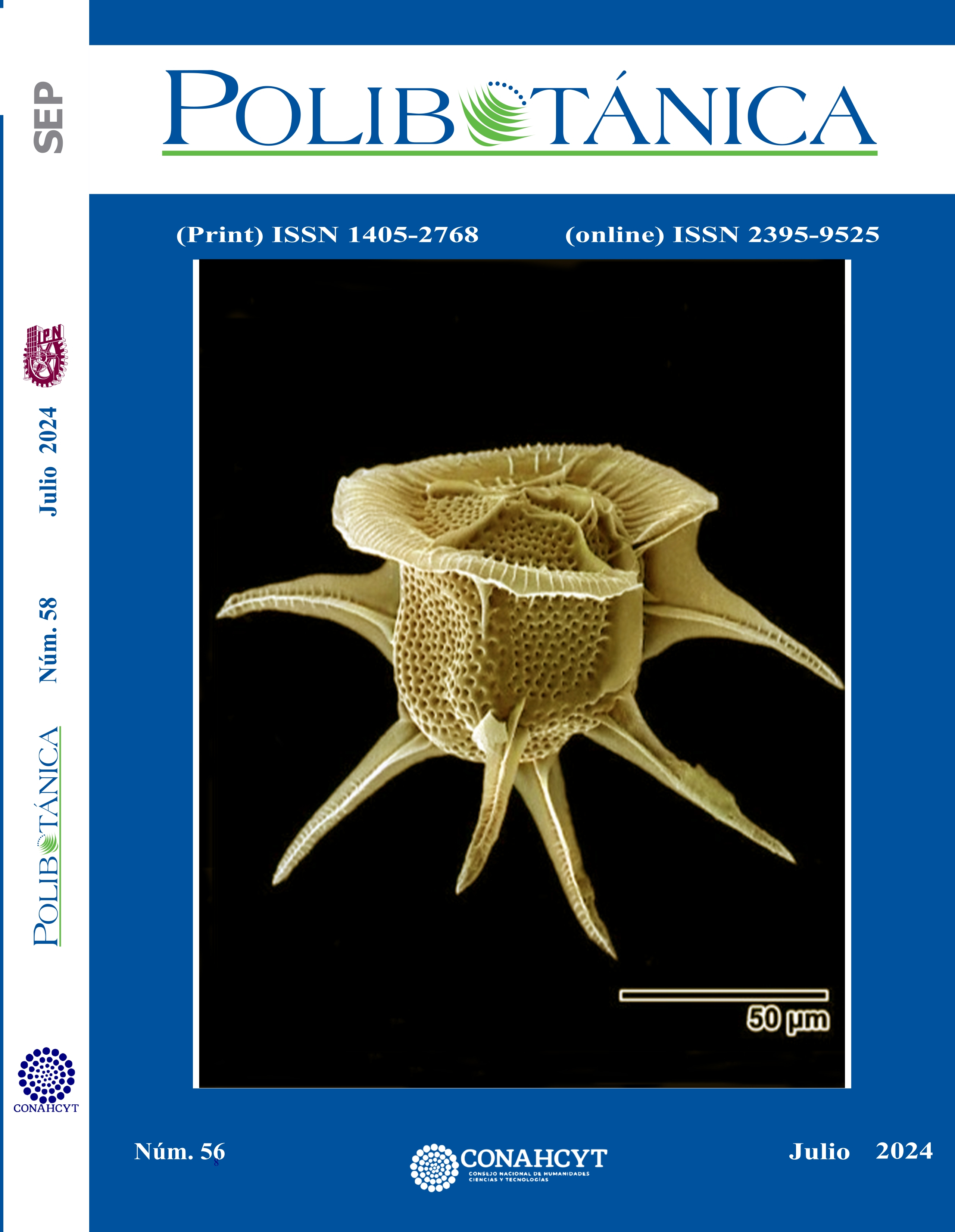
POLIBOTANICA 58
Núm. 58 (29)Ceratocorys horrida F. Stein 1883 (Oxyphysaceae) es una especie de dinoflagelado que forma parte del fitoplancton marino, crucial en la cadena alimentaria acuática. Este organismo tiene una forma redondeada con largas y delgadas espinas que le ayudan en la defensa y la flotabilidad. Se encuentra en aguas superficiales y costeras ricas en nutrientes, con una distribución global. Puede formar floraciones algales que, aunque beneficiosas en niveles moderados, pueden causar eutrofización y producir toxinas en exceso. Se utiliza en estudios de calidad del agua y salud del ecosistema marino.
-

POLIBOTANICA 57
Núm. 57 (29)Schizophyllum commune Fr. Schizophyllaceae. “Nanacate”. Hongo con sombrero en forma de abanico o concha, cubierto de pelos erectos, de 2 a 4 cm de diámetro, en estado seco presenta un color blanquecino que cambia a gris pardusco con la humedad, es duro y coriáceo. Himenio compuesto por una especie de pliegues, pseudo láminas, divididas en dos aristas más claras y dispuestas en abanico desde el pie. Tienen la característica de que en tiempo seco se retraen y cierran para proteger el himenio, abriéndose, en tiempo húmedo. Su color es rosa, rosa-canela, que evoluciona oscureciéndose. Pie lateral y prácticamente inexistente. Es una especie lignícola que parasita o saprofita árboles, fundamentalmente caducifolios. Es muy común y aguanta en el sustrato todo el año. Se desarrolla en diversos substratos vegetales muertos o vivos y en ambientes con clima caliente a templado, ocasionalmente en clima frío en zonas con vegetación silvestre casi siempre alterada, desde el nivel del mar hasta cerca de los 3,000 m de altitud. Con distribución cosmopolita, son patógenos en humanos.